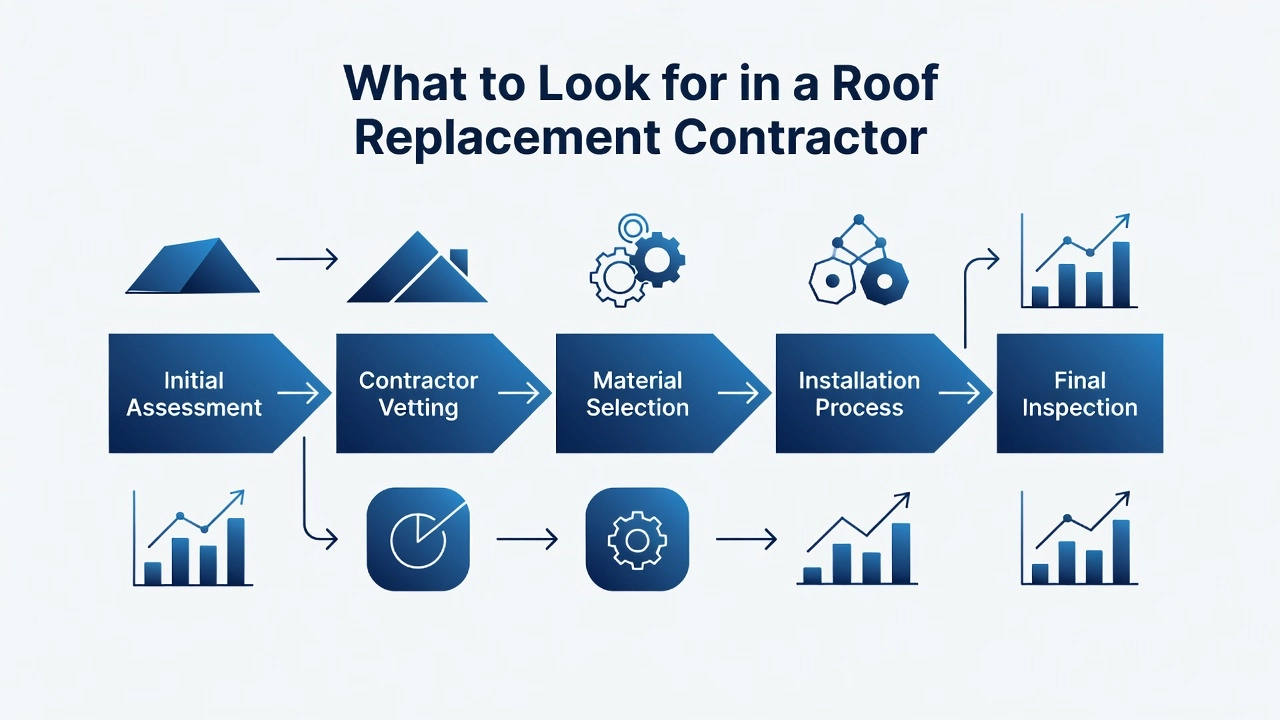
What to Look for in a Roof Replacement Contractor
Learn how to vet a roof replacement contractor in Bakersfield, CA. Covers costs, materials, licensing, and what to expect during the process.
Your roof is one of the most critical investments protecting your home, and when it's time for a replacement, choosing the wrong contractor can turn a necessary upgrade into a costly nightmare. With countless options available, knowing how to separate the professionals from the opportunists is essential before signing any contract.
Finding a reliable roof replacement contractor goes beyond simply searching online and picking the first name that appears. The process requires careful evaluation of credentials, experience, and business practices that many homeowners overlook until problems arise. Whether you've already received a few quotes or you're just beginning your search, understanding what truly distinguishes a trustworthy contractor will save you time, money, and significant stress.
In this guide, you'll discover the key factors every homeowner should examine before committing to a roofing professional. From proper licensing and insurance to warranty offerings and communication standards, these criteria will give you a clear framework for making a confident, informed decision. By the end, you'll know exactly what questions to ask and what red flags to watch for throughout the hiring process.
Replacement vs. Repair: How to Know Which One You Actually Need
Material lifespan is the starting point for every repair-versus-replace conversation. Asphalt shingles are engineered to last 20 to 25 years under normal conditions, though Bakersfield's intense heat and UV exposure can compress that range. Concrete and clay tile systems are significantly more durable, with expected lifespans of 40 to 50 years. Flat commercial membranes such as TPO and modified bitumen fall in the 15 to 25 year range, with actual performance tied closely to installation quality and how consistently the system has been maintained. A roof in the first half of its expected life that takes isolated storm damage is almost always a repair candidate. A roof approaching or past that threshold with spreading problems across multiple zones is telling a different story entirely.
Systemic failure indicators shift the decision firmly toward replacement. Widespread granule loss across multiple roof sections signals that the asphalt layer is deteriorating beyond what spot repairs can address. Multiple active leak points, sagging deck sections, and daylight visible through the attic are not repair problems; they are signs that the entire system has reached the end of its serviceable life. As contractors who assess these conditions regularly confirm, when problems are distributed across the roof rather than clustered in one zone, the underlying structure itself is often compromised.
Localized damage, by contrast, often justifies targeted repair. A single storm-damaged field section, isolated flashing failure around a chimney or vent, or a small membrane puncture on an otherwise sound commercial roof are all strong repair candidates, provided the surrounding material retains structural integrity.
Insurance coverage adds another layer to this decision. After a qualifying weather event, carriers frequently require full replacement when damage affects 25% or more of the roof surface, a threshold rooted in building code standards that apply in many jurisdictions. Before committing to either path, a professional inspection is essential. Hidden deck rot, saturated insulation, and underlayment failure are invisible from the street but routinely change the entire calculus once a qualified contractor gets on the roof.
What Roof Replacement Actually Involves: Process, Timeline, and What to Expect
Understanding what a roof replacement actually involves helps you evaluate contractors, anticipate disruptions, and avoid being caught off guard by scope changes mid-project.
Stage 1: Inspection and Scoping
A qualified roof replacement contractor begins every project with a thorough assessment of the existing roof system before any contract is signed. This includes evaluating the deck for soft spots, rot, and structural damage that isn't visible from ground level. The contractor should deliver a written scope of work documenting which materials will be used, what existing damage will be addressed, and what falls outside the project scope. Homeowners who skip this step frequently encounter surprise charges when hidden deck damage surfaces during tear-off.
Stage 2: Permitting
In Kern County, most full roof replacements require a building permit. Pulling that permit is the contractor's responsibility, not the homeowner's. Permit processing typically takes three to seven business days depending on the building department's workload. Work that proceeds without a permit creates real liability at resale in California and can compromise homeowner's insurance claims if unpermitted work is discovered during the claims process.
Stage 3: Tear-Off and Deck Preparation
The crew removes all existing roofing material down to the deck, inspects the sheathing, and replaces any damaged sections before proceeding. Per The Roof Replacement Process, this phase exposes hidden damage that must be corrected before a new system is applied.
Stage 4: New Roof System Installation
Underlayment, drip edge, field material, and all flashing components are installed per manufacturer specifications. Deviation from those specifications is the most common reason manufacturer warranties are voided, making installation quality a direct financial issue for the property owner.
Timeline and Bakersfield-Specific Scheduling
A standard residential replacement typically takes one to three days on-site. Commercial projects on warehouses or multi-unit properties can run one to two weeks or longer depending on square footage and material lead times. In Bakersfield, summer temperatures regularly exceed 105 degrees Fahrenheit, and experienced local contractors schedule labor-intensive work during early morning hours to protect crew safety and ensure proper adhesive and sealant performance during application.
Roofing Materials That Hold Up in Bakersfield's Climate
Not all roofing materials are created equal, and in Bakersfield's inland climate, where summer temperatures routinely exceed 100°F and UV exposure is relentless year-round, the wrong material choice leads to accelerated degradation and costly early replacement.
Asphalt Shingles: Grade Matters More Than You Think
Asphalt shingles remain the most widely installed residential roofing material in Kern County, primarily because of their lower upfront cost and broad contractor availability. However, standard three-tab shingles are poorly matched to Bakersfield's climate. Research from the Insurance Institute for Business and Home Safety identifies climate-inappropriate material selection as a leading cause of premature roof failure, and studies show standard shingles lose granules up to 40% faster in extreme heat zones compared to temperate climates. Architectural shingles with Class 4 impact resistance ratings and high Solar Reflectance Index values are the appropriate choice here, reflecting more solar energy and resisting the thermal cycling that breaks down lower-grade products.
Concrete and Clay Tile: Built for California Heat
Concrete and clay tile roofing is a proven performer throughout California's dry, high-heat regions. Tile's profile creates a natural air gap above the roof deck, which ventilates heat buildup and reduces attic temperatures meaningfully during peak summer months. This passive ventilation also supports compliance with California's Title 24 energy standards, which apply to both new construction and qualifying re-roofing projects statewide. Per Palomar Solar and Roofing's California climate guide, tile consistently ranks among the top material choices for California homeowners prioritizing longevity and energy performance.
TPO and Modified Bitumen for Commercial Roofs
For flat and low-slope commercial roofs on Bakersfield warehouses, retail centers, and multi-unit properties, TPO (thermoplastic polyolefin) is a leading California option. Its white reflective membrane reduces rooftop surface temperatures and qualifies as a cool roof under California Energy Code, with reflective roofing documented to cut cooling costs by 10 to 25 percent in extreme heat zones. Modified bitumen serves commercial properties with heavy rooftop foot traffic requirements, including facilities with rooftop mechanical equipment access. Its reinforced, layered construction delivers strong puncture resistance and a well-documented performance record across California's commercial sector.
Title 24 Compliance Is Not Optional
California's Title 24 building standards govern roofing material performance on both new and replacement projects, covering minimum solar reflectance and thermal emittance thresholds. Working with a roof replacement contractor who lacks Title 24 familiarity creates real inspection risk. Failed inspections trigger costly rework and project delays. As Trilink Contracting's 2026 roofing material comparison notes, material selection decisions carry long-term performance and compliance consequences that extend well beyond installation day.
What Roof Replacement Costs and What Drives the Price
Roof replacement is a significant capital expense, and knowing what to expect before you request a single bid puts you in a measurably stronger position.
Residential costs in California typically range from $11,500 to $16,000 for an average 2,000-square-foot home with architectural shingles, placing the state among the most expensive in the country. Material selection stretches that range considerably: tile roofing runs $10,665 to $20,900 on a similarly sized home, while metal roofing can exceed $40,000 depending on system type and complexity. High-end tile installations on larger homes with steep pitches routinely push past $25,000. For a detailed breakdown of current California pricing, this 2026 roof replacement cost guide outlines material-specific ranges worth reviewing before you engage contractors.
Commercial replacement is priced differently. Flat and low-slope systems are quoted per square foot, with TPO and comparable membrane systems typically landing between $8 and $14 per square foot installed. On a 10,000-square-foot warehouse, that math produces a $80,000 to $140,000 investment before any deck repairs or access complications are factored in. California commercial roof replacement costs vary further based on building configuration and system type.
Five variables drive the final number on any project:
Total roof area, which is the foundational multiplier for every per-unit cost
Material type and grade, where the gap between asphalt and tile alone can double the total
Number of existing layers requiring tear-off, since each layer adds removal and disposal cost
Extent of deck damage found after tear-off begins, a hidden cost that cannot be fully assessed until the old material is removed
Roof pitch and access complexity, which directly affect labor time and safety requirements; labor alone accounts for 40 to 60 percent of total project cost
Permitting, dump fees, and disposal are legitimate line items that a qualified contractor will enumerate explicitly in any written proposal. A bid that omits them entirely and comes in unusually low is a structural warning sign, not a fortunate find. These costs are predictable and standard; their absence from a proposal usually means they surface later as change orders.
The fact that 79 to 80 percent of roofing industry revenue comes from replacement rather than new construction reflects how routine this expense genuinely is. Most properties will face it. Planning proactively with a qualified roof replacement contractor prevents emergency spending and the compounding structural damage that deferred replacement almost always produces.
6 Things to Verify Before Hiring a Roof Replacement Contractor
Selecting the right roof replacement contractor protects both your investment and your property. These six verification steps should be completed before signing any agreement.
1. California C-39 Roofing Contractor License
California requires a C-39 Roofing Contractor license from the California Contractors State License Board for any roofing work performed in the state. This is a specialty classification, distinct from a general contractor's license, and it confirms that the individual has met California's specific competency and legal requirements for roofing work. You can verify any contractor's current license number and standing directly at cslb.ca.gov. Be aware that licenses can lapse mid-project, so verify status before work begins and again before final payment. Any contractor who hesitates to provide their CSLB number should be removed from your list immediately.
2. General Liability and Workers' Compensation Insurance
Request certificates of insurance that name your property directly. Verbal assurances do not protect you. If a worker sustains an injury on your roof and the contractor carries no workers' compensation coverage, that liability can transfer to you as the property owner. This is not a theoretical risk; it is a documented exposure that homeowners face regularly when hiring underinsured contractors.
3. Manufacturer Certification Status
Certified contractors through programs like GAF Master Elite or Owens Corning Platinum Preferred can unlock enhanced system warranties offering up to 50-year material coverage and 25-year workmanship coverage that uncertified installers simply cannot provide. GAF Master Elite contractors represent approximately 2% of all roofing contractors in North America, a deliberate cap tied to the long-term warranty commitments these programs carry. Critically, both certifications require annual renewal, so verify current status through each manufacturer's online contractor directory, not through the contractor's own marketing materials.
4. Local References and Verifiable Review History
Ask for three references from Bakersfield or Kern County projects completed within the past 12 months. A contractor actively working in this market should produce these without hesitation. Cross-reference their Google and BBB profiles, focusing not just on star ratings but on how they respond to complaints and whether clients report consistent follow-through after project completion.
5. Written Scope of Work and Itemized Estimate
A professional contractor provides a written document specifying materials by manufacturer and product line, tear-off and disposal procedures, permit responsibility, payment schedule, and project timeline. In Kern County, roofing permits are a contractor responsibility and must be addressed explicitly in this document. Be cautious of any contractor requesting a large upfront deposit before work begins; a reasonable schedule ties payments to project milestones. Verbal estimates are not acceptable at this investment level.
6. Workmanship Warranty Terms
Manufacturer warranties cover material defects. Installation errors are covered only by the contractor's own workmanship warranty, and terms vary widely among non-certified contractors. Ask directly: how long does the warranty run, what installation failures does it cover, and does it transfer to a subsequent owner? Confirm transfer procedures in writing at the time of installation, not when you eventually sell the property.
Residential and Commercial Roof Replacement: Key Differences
Not all roof replacement projects are created equal, and the gap between residential and commercial scope is significant enough that the two should be treated as entirely separate service categories.
Scope and System Complexity
Commercial roofs on warehouses, retail strips, and multi-unit properties operate as active working platforms. Beyond raw surface area, which dwarfs any residential project, commercial rooftops carry HVAC units, electrical conduit, exhaust systems, and drainage infrastructure that require precise flashing details and coordination with mechanical and electrical trades. A missed penetration or improperly terminated membrane around a rooftop unit creates immediate leak exposure. Residential replacements involve far fewer penetrations and no ongoing equipment load, making the technical coordination requirements fundamentally different.
Material Differences
Residential roofs in Bakersfield are predominantly sloped and finished with asphalt shingles or tile. Commercial buildings, by contrast, are typically flat or low-slope, requiring membrane systems with entirely different installation methods and inspection protocols. The three dominant commercial membrane categories are TPO (heat-welded seams, highly reflective), EPDM (rubber membrane suited to temperature extremes), and modified bitumen (torch-applied or cold-adhesive multi-ply construction). Each system uses different seaming techniques, termination details at parapet walls, and manufacturer warranty requirements that have no overlap with residential shingle applications.
Business Impact and Disruption Management
Commercial replacements introduce operational complexity with no residential parallel: active tenants, ongoing business operations, liability from debris and noise, and the need to maintain safe building access throughout the project. A qualified commercial roof replacement contractor should deliver a phased work schedule, written debris and noise management protocols, and proactive communication with all building occupants before work begins.
ROI for Commercial Property Owners
A properly executed commercial roof replacement extends the building envelope's serviceable life by 20 to 30 years. In Bakersfield, where summer temperatures regularly exceed 100 degrees Fahrenheit, reflective TPO membrane systems reduce cooling loads meaningfully while meeting California's Title 24 cool-roof compliance requirements. Beyond energy savings, replacement eliminates documented moisture damage liability and strengthens asset valuation during refinancing or sale due diligence.
K-9 Custom Roofing serves retail spaces, warehouses, and multi-unit properties throughout Bakersfield and Kern County, providing full-service commercial replacement capabilities including flat and low-slope membrane systems designed to keep tenant operations running with minimal disruption.
Choosing the Right Contractor Makes the Difference
Roof replacement ranks among the largest single investments most property owners will ever make, and the contractor you select determines whether that investment performs reliably for 25 years or begins generating costly callbacks by year two. The verification steps covered earlier in this guide are not optional formalities; they are the difference between a project that holds and one that doesn't.
Before signing anything, confirm the contractor holds an active California C-39 roofing license, carries current workers' compensation and liability insurance certificates, holds manufacturer certification from a recognized program, and provides a written scope of work that covers materials, decking inspection, permits, and warranty terms. A contractor who resists any of these requests is telling you something important.
For Bakersfield and Kern County properties specifically, local expertise is a structural advantage. A contractor with established roots in the region understands Title 24 cool roof compliance, knows the Kern County permit office, and has relationships with regional material suppliers that translate to faster timelines and fewer surprises. Out-of-area crews and traveling storm chasers lack that local accountability, and once the job is done, they're gone.
K-9 Custom Roofing Inc. provides free, no-obligation estimates for both residential and commercial replacement projects throughout Bakersfield and the surrounding area. Contact the team to schedule an inspection and receive a written scope of work before making any commitment.
Conclusion
Choosing the right roof replacement contractor does not have to feel overwhelming. By focusing on proper licensing and insurance, verified experience, transparent pricing, and strong warranty offerings, you position yourself to make a confident, informed decision. Taking the time to vet communication habits and check references will further separate the professionals from those who simply want a quick payday.
Your roof protects everything and everyone inside your home, so this investment deserves serious attention and careful research. Do not let urgency or a low price tag push you into a decision you will regret.
Start today by gathering at least three quotes from licensed contractors in your area. Ask the hard questions, read every line of the contract, and trust your instincts. The right contractor is out there, and now you have the tools to find them.